

Understanding the true impact of your Customer Success efforts is essential for sustainable business growth. Whether you are an experienced Customer Success Manager (CSM), an aspiring professional, or a team lead overseeing customer success teams, knowing which Customer Success metrics to track is what enables data-informed decisions that improve retention, increase revenue, and grow customer lifetime value. This guide walks through the metrics that matter most, with actionable steps for measuring and acting on each one.
Why tracking Customer Success metrics matters
Customer Success is about more than satisfying customers — it is about building long-term relationships that produce mutual growth. But how do you quantify success? The answer lies in tracking specific, meaningful metrics. These numbers reveal how effectively your team is supporting customers, surfacing potential issues before they escalate, and identifying growth opportunities.
By understanding how to implement and track these metrics, teams can allocate resources more effectively, tailor personalised experiences, and reduce churn. For newer practitioners, this guide provides a roadmap for building a results-driven Customer Success function that aligns with business objectives.
Top Customer Success metrics to track for business growth
Below are the key metrics every Customer Success Manager and team should monitor. Each metric includes a definition, why it matters, and tips on how to use the data effectively.
1. Customer churn rate
Definition: the percentage of customers who cancel or do not renew their subscription over a given period.
Why it matters: high churn rates directly slow growth, signalling dissatisfaction, product-market misfit, or ineffective onboarding. Monitoring churn lets you identify risk segments early and tailor retention strategies accordingly.
How to track: measure monthly and yearly churn, segment by customer demographics (industry, size, usage), and investigate root causes through qualitative feedback.
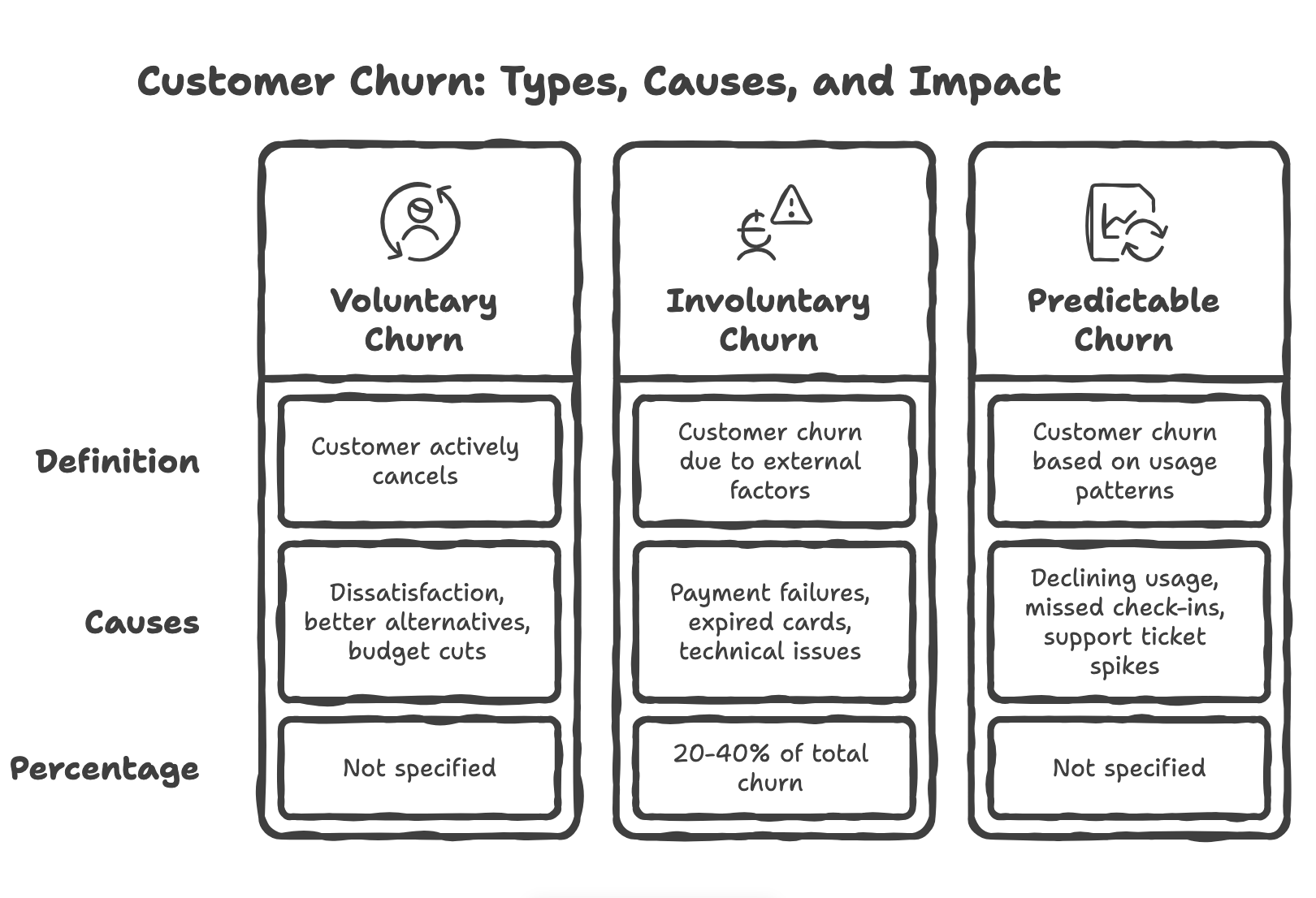
For the formulas that calculate customer churn, gross revenue churn, and net revenue retention correctly — plus the four types of churn worth tracking separately — see our companion guide on what customer churn is and how to calculate it.
2. Net Promoter Score (NPS)
Definition: a widely-used metric that measures customer loyalty on a scale from 0 to 10, indicating how likely customers are to recommend your product or service.
Why it matters: NPS captures customer sentiment and indicates potential for advocacy. A healthy NPS correlates strongly with organic growth through referrals and upsells.
How to track: conduct regular NPS surveys and analyse trends over time rather than isolated scores. Segment results by product features, account managers, or customer tenure.
3. Customer Health Score
Definition: a composite score that evaluates the overall health of a customer relationship based on product usage, support ticket status, survey data, and payment history.
Why it matters: this proactive metric helps teams focus attention on at-risk customers before churn happens, and identifies upsell opportunities.
How to track: combine quantitative data points into a weighted formula tailored to your business model. Use dashboards for real-time monitoring.
4. Customer Lifetime Value (CLV)
Definition: the total revenue a business expects to earn from a single customer over the entire relationship.
Why it matters: CLV informs budgeting and resource allocation decisions. Increasing CLV means your company is extracting more value from each customer, which drives growth without proportionate increases in acquisition costs.
How to track: calculate using historical revenue data and average customer lifespan, and segment by customer type for deeper insights.
5. Customer engagement metrics
Definition: indicators of how actively customers use your product or service, including login frequency, feature usage, session duration, and attendance at webinars or training sessions.
Why it matters: engagement is a leading indicator of customer satisfaction and retention. Low engagement signals potential churn risk or product usability issues.
How to track: use product analytics tools to monitor behaviour trends, and correlate engagement with support tickets or NPS feedback.
How to implement a Customer Success metrics tracking program
Understanding the metrics is the first step, but successful Customer Success measurement requires a structured approach. Five steps to implement metrics tracking effectively:
- Define your objectives: align tracking with business goals. Decide whether reducing churn, increasing upsells, or improving satisfaction is your priority.
- Choose relevant KPIs: focus on a manageable set of metrics that offer actionable insights rather than overwhelming teams with data.
- Use tools and technology: invest in dashboards and CRM integrations to automate data collection and visualisation.
- Regular analysis and reporting: schedule weekly or monthly reviews with your Customer Success team to evaluate data trends and adjust strategies.
- Combine with qualitative feedback: pair metric data with customer interviews, surveys, and support interactions for a complete picture.
Following these steps helps your team become more predictive and less reactive — a key marker of mature Customer Success practice.
Real-world examples of Customer Success metrics driving growth
Three examples of companies that used Customer Success metrics to produce measurable business results:
- SaaS company reducing churn: by combining churn rate analysis with customer health scores, a SaaS firm discovered that low engagement in a key product feature led to cancellations. They launched targeted onboarding and product training, reducing churn by 15% in six months.
- Enterprise B2B raising CLV: after tracking NPS and segmenting by industry, a B2B provider tailored upsell offers to promoters in the technology sector, resulting in a 25% increase in CLV.
- Customer support improving NPS: a subscription business used NPS tracking post-support ticket resolution to identify friction points, which led to retraining of support agents and a 10-point NPS increase within a year.
These examples illustrate how focusing on and acting upon the right Customer Success metrics produces measurable business outcomes.
Make metrics your compass for growth
Tracking the right Customer Success metrics isn’t just about collecting numbers — it is about surfacing insights that drive action. By understanding how to implement and use these metrics, you position your team and company for continued growth and stronger customer relationships.
Use this guide as your foundation. Start small, track consistently, and refine your approach based on real-world feedback and data. The results: reduced churn, higher engagement, increased revenue, and a customer base that grows with the business.


Leave a Reply