

Most of what a Customer Success Manager eventually knows gets learned the hard way — after a renewal slips, an escalation lands on a Friday afternoon, or a customer quietly churns while everyone was busy being helpful. The habits that would have prevented those moments rarely show up in onboarding documents or playbooks. They get passed around in Slack channels, vented about on Reddit threads, and mentioned over drinks at the end of long weeks.
A recent discussion in the r/CustomerSuccess community asked practitioners to name the one habit, system, or mindset they wished they had built earlier in their careers. The responses were unusually honest. Some were tactical. Some were structural. A few were deeply cynical — the kind of answers that only come from people who have been doing this work for a decade and have earned the right to their fatigue.
This guide distils the most actionable of those lessons into nine habits every CSM should build early — organised into three categories that correspond to how the profession actually breaks down in practice: how you manage your customers, how you manage yourself, and how you manage your career. If you are in your first two years of Customer Success, treat this as a shortcut. If you are further in, it may be a checklist of the things you already know but do not yet do consistently.
Why these habits matter more than any framework
Customer Success is a role where the difference between good and mediocre is rarely a matter of strategy. It is almost always a matter of consistency. The frameworks are widely published. The playbooks are freely available. What separates CSMs who are trusted by their customers and respected internally from those who are perpetually firefighting is not what they know — it is the daily behaviours they have automated so completely that they no longer require conscious effort.
Habits compound. A recap email sent after every meeting, a weekly ten minutes spent updating a wins log, a quarterly review of customer language patterns — none of these feel important in isolation. Over three years they become the difference between a CSM who gets promoted and one who gets burned out. If you want a broader picture of where these habits fit, our complete guide to Customer Success Management covers the full lifecycle these behaviours support.
Habits for managing customers better
1. Set expectations before you set timelines
The most common failure pattern in early-career CS is confusing helpfulness with expectation-setting. Saying yes, accommodating scope changes, and being eternally available feels like good service. It almost always creates the opposite outcome: a customer who believes everything is in scope, followed by a relationship that deteriorates the first time reality intrudes.
Experienced CSMs describe this as a quiet inversion: the most helpful thing you can do in the first thirty days is make what the customer owns, what you own, and what is out of scope explicit. Document it in writing. Revisit it in the kickoff. Reinforce it whenever it begins to drift. Vague alignment creates predictable conflict at renewal, when both sides discover they were measuring success against different definitions the entire time.
A practical question that surfaces in nearly every expert discussion of this habit: ask the customer, in plain language, what success looks like for them in three months — not in OKR-speak, not in platform metrics, but in ordinary words. If they cannot answer, that is the real finding, and it is better discovered in week one than in month eleven. Our breakdown of setting customer expectations during onboarding goes deeper into how to make this conversation structured rather than awkward.
2. Position yourself as a coach, not a crutch
One of the most nuanced habits that appeared repeatedly in the community discussion: the instinct to always pick up the phone, always be immediately reachable, and always solve problems personally slowly erodes the customer’s own capability. It feels responsive. It reads to leadership as dedicated. But the customer quietly stops adopting the product, stops remembering the workflows, stops developing internal expertise — because they have you.
The reframe that veteran CSMs describe is to distinguish your role from technical support the moment the relationship begins. Explain the difference. Share support’s contact details. Make it clear that you are a strategic partner for outcomes, while support is the right team for tickets and troubleshooting. Crucially, this does not mean being unavailable — it means being purposefully positioned. One CSM in the thread described leaving voicemails transcribed to email so urgent issues still reached them even during meetings, while routine calls naturally routed to the correct team. The goal is always the same: empower the customer, rather than doing the work for them. The differences between Customer Success and Customer Service are worth internalising early, because this distinction drives dozens of smaller daily decisions.
3. Send a recap email after every important conversation
The single highest-leverage habit in the entire community discussion, mentioned in multiple variations across responses, is the post-meeting recap. It is unglamorous. It takes ten to fifteen minutes. It also prevents an estimated majority of future disputes about what was agreed, who owns what, and what the timeline was supposed to be.
A good recap email has four components: what was discussed, what was decided, who owns what, and when the next checkpoint is. That is it. You are not writing a court transcript. You are creating a single source of truth that both sides have received, can reference, and can correct if you misheard something. The recap becomes the document the customer will return to the next time they are confused about status — which means you are shaping their memory of the relationship, rather than leaving it to chance. Our guide to follow-up email tips and timing includes templates for the common situations.
4. Document patterns, not just problems
Early in a CS career, most of your day involves resolving individual issues for individual customers. One asks a question about billing. Another raises a confusion about a feature. A third escalates something that turns out to be configuration. You solve each one, feel productive, and move on.
The habit that separates scalable CSMs from perpetual firefighters is stepping back the moment you notice yourself answering the same question for a third time. When that happens, the problem is not the customer — it is the documentation, the onboarding flow, the product, or the handoff. Log the pattern. Push for a structural fix. Update the help article. File the product feedback with a count attached. Every pattern you document and resolve at the source is a dozen future tickets you will not have to personally absorb.
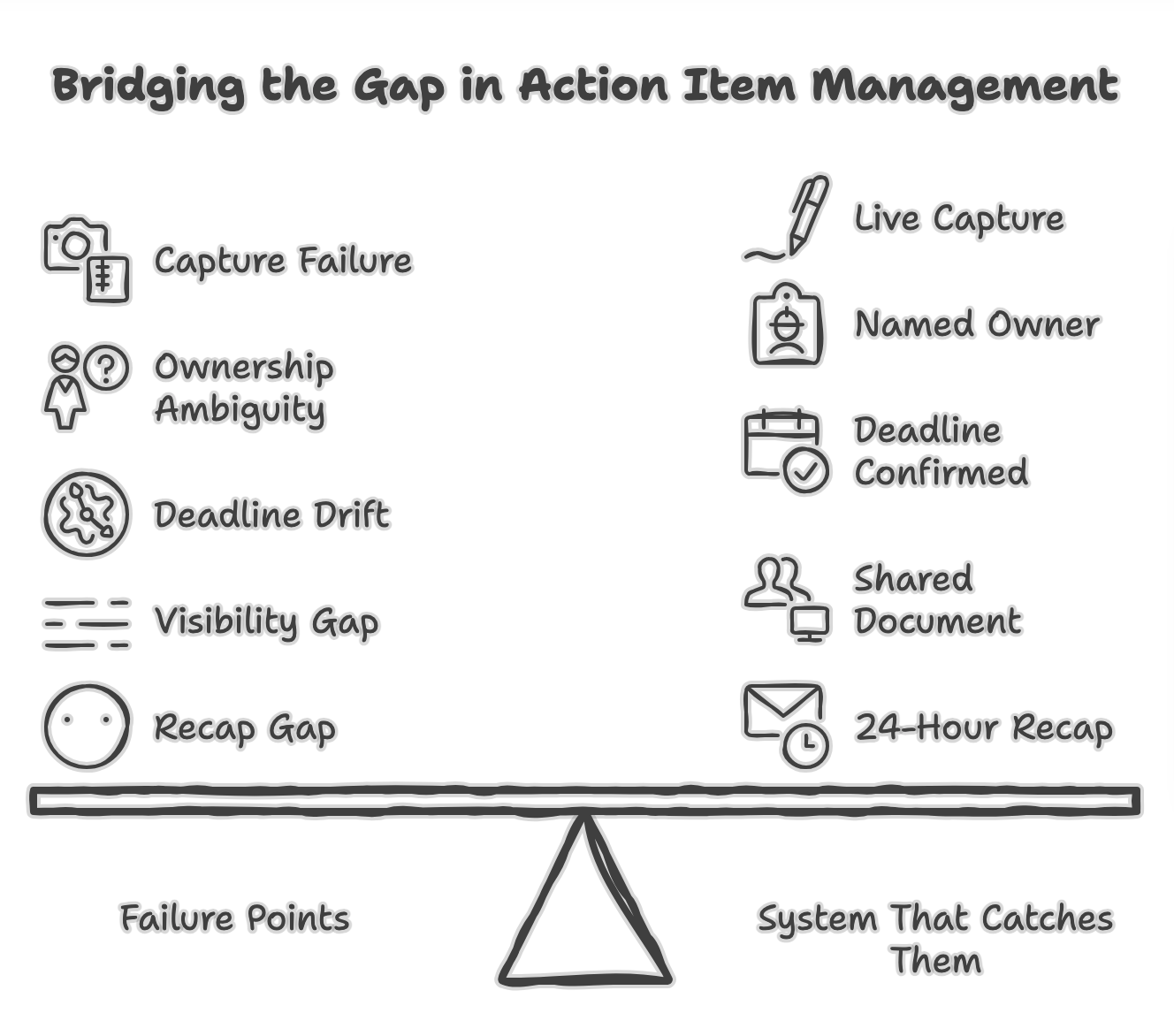
A related sub-habit several senior CSMs described: save the exact words customers use — from tickets, Slack threads, call notes — and tag them with simple categories like goal, confusion, and risk. Reviewed weekly, this archive becomes the single best expectation-setting tool you have, because you can point to patterns rather than vibes when talking to product, sales, or leadership. The mechanics of capturing those signals reliably — rather than relying on memory between weekly reviews — are covered in detail in our companion guide to why action items slip between weekly check-ins and how to build a system that catches them.
5. Track leading indicators, not just lagging ones
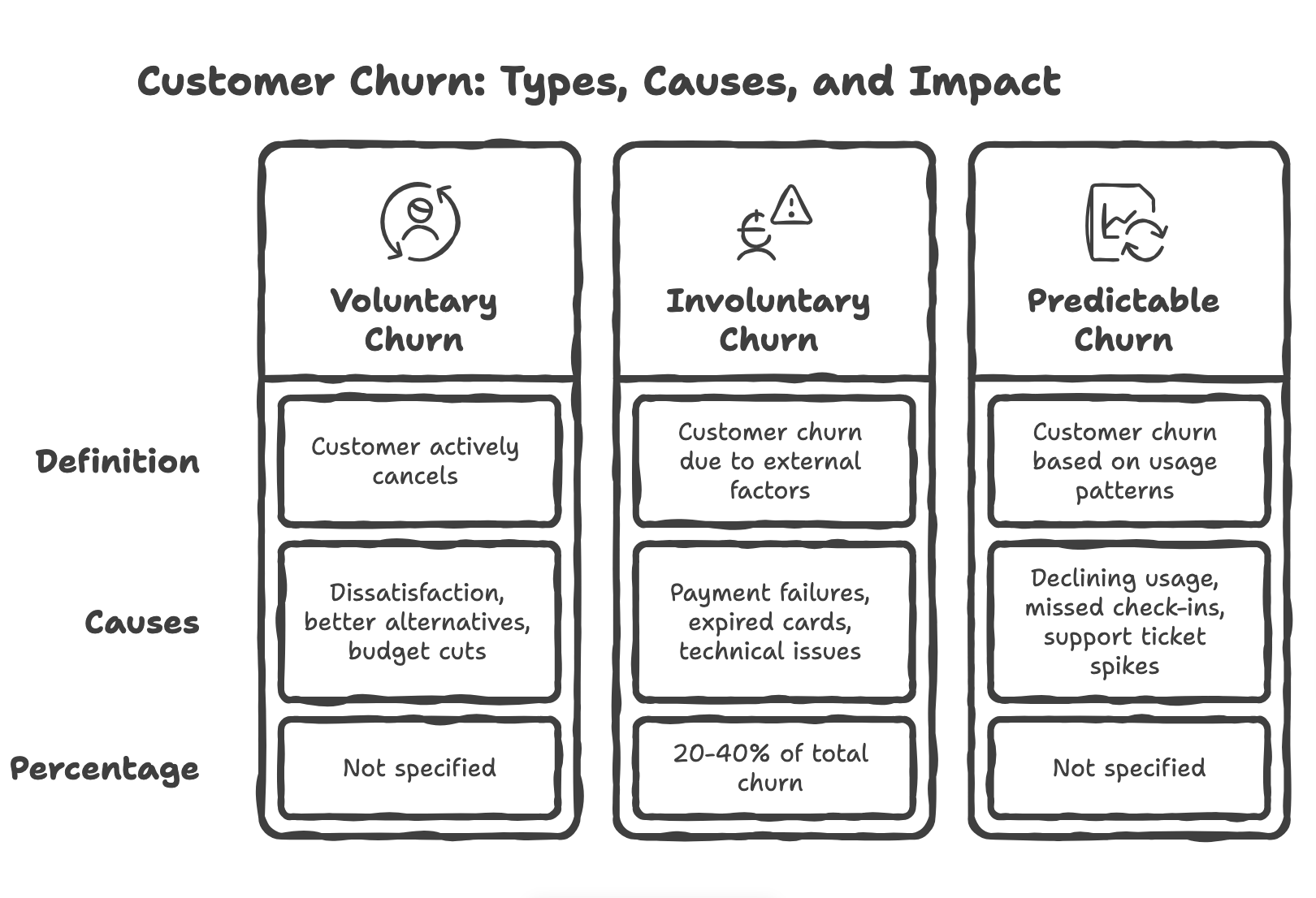
By the time a renewal is in jeopardy, the warning signs have usually been visible for months. Declining logins. Skipped QBRs. Unanswered emails. A champion who left and was never re-engaged. Silent accounts. The habit that prevents most preventable churn is treating Customer Success as a pattern recognition discipline rather than a firefighting one.
Build a weekly rhythm around your health data. Pick three or four signals that genuinely predict risk in your segment — not the ones your CS platform defaults to, but the ones that have actually preceded churn in your book of business — and check them every Monday before anything else. Treat data as a conversation starter, not a report card. When a signal shifts, reach out with curiosity, not alarm. Our overview of the Customer Success metrics worth tracking covers the mechanics, and our piece on proactive versus reactive customer management explains the mindset this habit is built on.
Habits for managing yourself
6. Learn to say no — to customers and internal stakeholders
The ability to say no, kindly and clearly, is the habit most frequently named as the one that would have saved the most stress earlier. It applies in both directions. No to scope creep from customers who want you to do work that belongs to support, implementation, or services. No to internal stakeholders who want you to own metrics you do not control, attend meetings that do not need you, or take on projects that crowd out your actual accounts.
Boundaries are not a personality trait — they are a professional practice. Saying no is easier when you have a framework: a clear definition of what CS owns, what success looks like for your accounts, and what measurable outcome a given request would actually contribute to. Without that framework, every request feels personal. With it, a no becomes a negotiation about priorities, not a conflict about willingness. Protect your calendar early, before the pattern of being always-available becomes expected behaviour.
7. Think like a salesperson in every meeting
One of the more counter-intuitive lessons from experienced CSMs: you are selling at every customer meeting, whether you call it that or not. Each QBR, each check-in, each feature demo is an opportunity to reinforce why the product matters, what value has been delivered, and why the relationship is worth continuing. CSMs who leave selling entirely to the sales team arrive at renewal with no narrative of value — and then have to construct one in a rush, under pressure, with a customer who has already started evaluating alternatives.
This does not mean becoming a second account executive. It means developing the instinct to translate every interaction into a value story — outcomes achieved, time saved, metrics moved, risks avoided. Build the habit of ending each customer meeting with one specific observation about value delivered since the last one, and capturing it. By renewal time, you will have a continuous thread of proof, and the conversation will feel like a natural continuation rather than a pitch. Our deeper view on the integration of Customer Success with Sales explains how to structure this without blurring role boundaries.
Habits for managing your career
8. Keep a brag book — from day one
A consistent thread running through the veteran responses was the regret of not documenting wins. The saved account. The expansion closed. The escalation de-escalated. The customer who went from red to green and stayed there. These moments feel obvious in the moment and are completely gone from memory eighteen months later — exactly when you need them for a performance review, a promotion case, or a job interview.
Build a simple log. A Notion table, a spreadsheet, a running document — the tool does not matter. For each entry, capture: what the situation was, what you did, what the measurable outcome was, and any ARR impact. Tag each entry by theme (retention, expansion, adoption, advocacy) so you can filter. Spend ten minutes every Friday updating it. The CSMs who do this consistently have a compounding advantage over those who do not: when opportunity arrives, they already have the evidence assembled.
9. Know when to stay, and when to leave
The honest final habit, and the one that rarely appears in Customer Success content written by anyone still selling training: learn to recognise whether the environment you are in is survivable. Not every CS role is. Some are structurally set up to fail — the CSM is made responsible for churn they have no authority to prevent, asked to own renewal targets without influence over product, and expected to be available around the clock for a book of business three times too large. No habit in this list survives that environment for long.
The senior voices in the community discussion were divided on this, which is itself a finding. Some described the work as deeply meaningful when the conditions support it. Others described a level of stress that had affected their health and would soon cost the profession their presence entirely. Both perspectives are real, and both deserve to be held without judgment. The career habit worth building early is the ability to distinguish between a hard moment in a good role and a pattern of signals that a role cannot be fixed from inside it. Our piece on when a CSM wants to quit addresses this directly — including the options that exist between staying miserable and leaving the profession entirely.
How to actually build these habits
Reading a list of habits is easy. Installing them is hard. A few practical principles, drawn from behavioural research and the patterns that appeared repeatedly in the community discussion:
Pick one habit at a time. Not nine. The CSMs who successfully changed their practice did so one behaviour at a time, usually over six to eight weeks per habit. Attach each new habit to an existing anchor in your workflow — the recap email happens immediately after the meeting ends, the brag book update happens during Friday coffee, the leading indicator check happens before you open Slack on Monday. Make the trigger automatic, and the behaviour will follow. Track whether you actually did it for the first thirty days; after that, the habit starts maintaining itself.
And be patient with yourself about the ones you cannot install yet. Every veteran CSM has a list of behaviours they know they should do and still do not. The profession rewards consistency, but it does not require perfection. The goal is steady compounding, not flawless execution.
Frequently asked questions
What is the single most important habit for a new CSM?
Consistently sending a recap email after every significant customer conversation. It is the lowest-effort, highest-impact habit in the profession, and it compounds across every other aspect of the role — expectation setting, risk management, renewal preparation, and internal credibility all improve when recaps are automatic.
How long does it take to build a new CS habit?
Most behavioural research suggests six to eight weeks of consistent daily repetition is enough to establish a habit that maintains itself. The common mistake is attempting multiple habits simultaneously. Pick one, attach it to an existing workflow trigger, and let it become automatic before starting on the next.
Should I prioritise customer-facing habits or internal ones?
Customer-facing habits produce faster visible results, but internal habits — brag books, boundary setting, pattern documentation — compound harder over a career. The ideal sequence is to build one customer-facing habit (recap emails work well) until it is automatic, then begin layering in internal habits that future-proof your career.
What should I do if my environment makes these habits impossible?
Recognise the signal. A role that actively prevents you from setting boundaries, documenting patterns, or protecting your time is not a role where habit-building will save you — it is a role that needs to change structurally, or that you need to leave. Use the brag book habit to build your evidence base regardless, because the transition to a better environment will go faster when you have it.
The habits that separate good CSMs from great ones
Customer Success is one of those professions where the gap between good and great is built out of small daily behaviours that almost nobody notices — until, over three years, the difference becomes impossible to miss. The CSM who sends recaps, documents patterns, tracks leading indicators, protects their time, and keeps a brag book ends up in a materially different career than the one who does not. None of these habits are hard. None require tools, certifications, or permission. They only require noticing them, and then doing them consistently, starting today.
If you are early in your CS career, pick one. Start this week. Come back to this list in three months and pick the next one. The experienced CSMs who contributed to the community discussion this article draws from did not arrive at these lessons through reading — they arrived at them through not doing them, and paying for it. You get to skip that part.

Leave a Reply