
Building a strong customer onboarding process is one of the highest-leverage operational decisions a Customer Success team makes. Whether you are an experienced Customer Success Manager (CSM), an aspiring professional, or a team lead managing customer success teams, understanding how to onboard customers well directly determines your customer satisfaction metrics. This article walks through a detailed, step-by-step approach designed to raise customer satisfaction and set your clients up for long-term success.
Why a strong customer onboarding process matters
Customer onboarding is the first real interaction your clients have post-sale. It shapes their perception, builds trust, and lays the foundation for the rest of the relationship. A well-structured customer onboarding process reduces churn, shortens time-to-value, and delivers a personalised experience that customers actually notice.
Industry research consistently shows that companies with effective onboarding processes see substantially higher customer retention rates — often by double-digit percentages. Onboarding isn’t just about welcoming customers; it is about actively guiding them to outcomes.
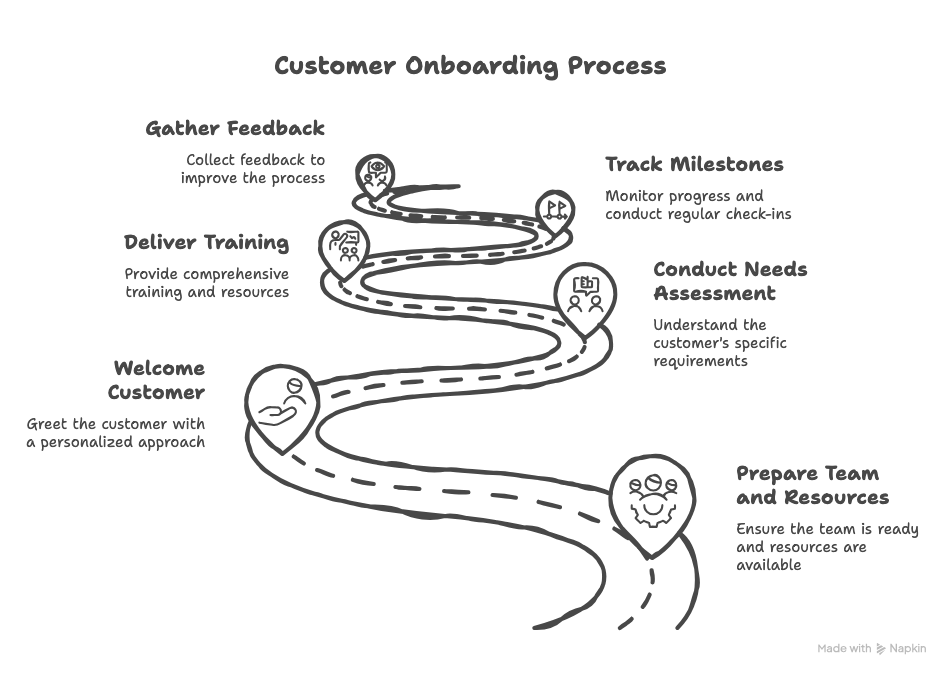
Step 1: Prepare your team and resources
Before reaching out to new customers, preparation is essential. Align your team around the onboarding objectives and equip them with the right tools and knowledge.
- Create onboarding playbooks: document standard workflows, frequently asked questions, and escalation paths to maintain consistency.
- Train your team: ensure everyone understands your product’s value proposition and the most common customer pain points.
- Set up CRM and onboarding software: use automation to track progress and deliver timely communications.
This foundational step ensures your customer success team is ready to deliver a coherent onboarding journey.
Step 2: Welcome your customer with a personalised approach
The initial contact sets the tone. Craft a warm, personalised welcome email or call that acknowledges the customer’s decision and establishes clear next steps.
- Thank the customer sincerely for their trust.
- Introduce the onboarding team and provide contact details.
- Share an onboarding timeline and what they can expect.
Personalisation signals to customers that they are valued, not just another account in a queue. This early signal materially improves engagement and satisfaction during the first 30 days.
Step 3: Conduct a detailed needs assessment
Understanding your customer’s specific goals is essential for tailoring the onboarding process. Schedule a discovery call or send a detailed questionnaire to uncover their needs, challenges, and expectations.
- Ask about their short-term and long-term objectives.
- Identify key decision-makers and stakeholders.
- Pinpoint potential hurdles or integrations required.
Tailoring training and support to what matters most to your customer raises their likelihood of reaching the success criteria they care about.
Step 4: Deliver comprehensive training and resources
Next, provide customers with the tools and knowledge they need to get started. Your goal is to enable them to use your product confidently and efficiently.
- Host live demos or webinars tailored to customer needs.
- Offer access to a self-service knowledge base or tutorial videos.
- Send customised training materials that address their specific objectives.
Hands-on training combined with accessible resources significantly raises customer satisfaction by reducing confusion and building user independence.
Step 5: Implement milestone tracking and regular check-ins
Monitoring progress during onboarding ensures customers are continuously supported and any issues are quickly resolved. Build a roadmap with clear milestones and schedule regular check-ins.
- Define success milestones relevant to the customer’s context (first login, first transaction, first integration completed).
- Use CRM tools to send automated reminders and track progress.
- Hold weekly or bi-weekly calls to address concerns and gather feedback.
This proactive approach increases transparency and trust — the two factors most strongly associated with strong onboarding outcomes.
Step 6: Gather feedback and iterate
Once onboarding is complete, solicit feedback to identify what worked and where improvements can be made. Continuous improvement is the hallmark of a mature onboarding process.
- Send surveys that focus on ease of use, clarity, and support responsiveness.
- Host follow-up meetings to discuss the customer’s overall experience.
- Analyse feedback trends and update your onboarding documentation accordingly.
Demonstrating that you listen and adapt reinforces your commitment to customer satisfaction and long-term relationships.
A practical example: SaaS company onboarding
Consider a SaaS company that implemented this step-by-step customer onboarding process. They prepared a playbook that all CSMs followed, sent personalised welcome emails within 24 hours, and used discovery calls to tailor training to client goals.
They used CRM automation to track onboarding milestones and gathered post-onboarding feedback through Net Promoter Score (NPS) surveys. The result was a 25% reduction in churn during the first 90 days and a measurable uplift in customer satisfaction scores.
This example underscores how a well-executed customer onboarding process produces measurable outcomes for both customers and the company.
Building onboarding as a continuous practice
A strategic customer onboarding process is fundamental to building lasting, satisfied customer relationships. By following the steps above — from preparation and personalisation through training and feedback collection — you can materially raise your customer satisfaction rates over time.
Whether you are a seasoned Customer Success Manager, an aspiring CSM, team lead, or newcomer, investing in onboarding craft is what produces measurable, compounding business results over the long run.

Leave a Reply